| |
Thank you for subscribing to the Outdoor Eyes Newsletter. I realize that not all articles will be of
equal importance to you, that some of the information enclosed will already be known and understood. But, if Outdoor Eyes motivates you to explore a new photography technique or an outdoor adventure, then it has fulfilled its purpose. Enjoy this month's issue. Philip "PT" Tulin
|
FEATURED PHOTOGRAPHER'S GALLERY |
yvonne jones
Y.J. Photography
alma k bailey
Welcome to In The Light Photography
anthony tubbiolo
Welcome to Tubbiolo Cards
art cole
A Gallery of Animals, Waterfalls. Landscapes and Wildlife that have danced across my viewfinder.
| |
|
In This Issue
Digital Image Recovery
Aidless Navigation
The Effect Of Weather & Seasonal Changes
How To Use A Monopod
OTG Wildlife Tracking
The Balance Of Nature
Featured OE Links
Subscriber's Contributions
Motion-Activated Photography
Adding Blue Sky & Clouds
|
|
...Digital Image Recovery |
|
Don't panic! All computer equipment fails after a certain amount of time and camera cards such as
CompactFlash, SmartMedia, Sony Memory Sticks, XD Cards, etc. are no exception. Unfortunately, they seem
to fail when you have stored the most important photographs. The lost images could also be due to
erasing or formatting a camera card. If it looks like your data is gone, erased, reformatted, overwritten or corrupted it is still often possible to retrieve it, even if your software tells you it's too late. If you don't panic and know what to do next, there is a good chance you may be able to salvage your images.
Top
How do I recover my lost images? »
|
|
...Aidless Navigation |
|
It's exciting to explore a new area that you've read about. But don't get so excited that you can't find your way back to where you started from. Sometimes, during the moment of On-The-Go Photography, we
sometimes forget that if proceed into uncharted waters, we might not be able to find the way back. That is when some navigation knowledge in the woods proves absolutely necessary. How many times have you seen some wildlife in the distance, and without even thinking, you're off in their direction? Maybe you don't even think that you're going that far off the beaten path. But, low and behold, you're somewhat lost.
Top
Learn about aidless navigation. »
|
|
...The Effect Of Weather & Seasonal Changes |
|
Wildlife tends to relate to the weather in the same way that we do. When it is cold, wildlife tends to
stay in a covered area to remain warm. In hot weather, wildlife tends to stay in a cool, shady area.
Their sense of smell is changed so they are more fearful of the danger that potentially lurks in the
outdoors. During rain storms, wildlife also tend to remain inactive. Once the storm is over or the
temperature changes, much wildlife activity will be seen.
Top
Learn about the effect of weather. »
|
|
...How To Use A Monopod |
|
OTG Digital Photography is not possible without the monopod with a flexible ball head that allows the
desired camera orientation needed to produce all types of photographs. The monopod is not considered
a replacement for the tripod as the tripod will always be steadier for taking photographs. But the monopod is easier to carry, easier to move around, lighter than the tripod, less confining and quicker during OTG Digital Photography.
Top
Learn how to use a monopod. »
|
|
...On-The-Go Wildlife Tracking |
|
There are three ways to see wildlife: start hiking and hope that you become lucky, try to follow the tracks that you found during your hike or try to understand the story behind the tracks. Don't think
that tracks are limited to deer, moose, fox, dogs and the rest of the animals that come to mind when tracks are mentioned. Ants, turtles, snakes, birds and a whole assortment of reptiles and insects leave tracks, too. OTG Wildlife Tracking doesn't necessarily mean seeing physical tracks. It is also an awareness that a OTG Wildlife Photography opportunity exists without ever having seeing any tracks. By understanding tracking concepts, you will become more aware of more wildlife, even if you can't identify the tracks.
Top
Learn more about OTG wildlife tracking. »
|
|
Subscriber Contributions
|
Motion-Activated Photography
by Ronald Urbassik
My wife and I always see deer tracks in the snow near our deer feeder. We rarely see the deer since they only appear during the middle of the night. She asked me to photograph the deer for her and I was not
about to wait patiently each night, not knowing if I was even going to have the opportunity for a
photograph. I set my digital camera on a tripod in the barn looking out an open window pointed in the direction of the deer feeder. I bought a motion-activated security light at a discount department store for $8.45 (without light bulbs) and a 12 volt solenoid on the Internet for $9.95. When motion is detected (either day or night), the solenoid presses the camera button and photographs deer, wild turkey or other wildlife that might appear.
Top
Adding Blue Sky & Clouds
by Bill Richardson
Just because the sky did not cooperate with the moment doesn't mean that the photograph is entirely ruined. With the help of Adobe Photoshop and the cloud filter, it is possible to create an entirely different feeling for your photograph.
Top
Learn how to add blue sky & clouds. »
Click here to submit your story or a helpful photography hint.
Bill, Ron... Thanks for the submits.
|
|
|
Featured OE Links |
|
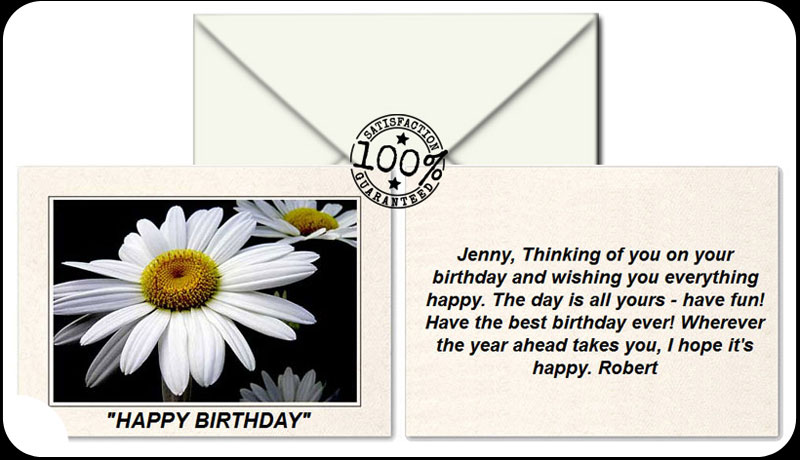
Outdoor Adventure Ecards
Over 1,000 Outdoor Adventure Photo Ecards are available for your sending pleasure in categories such as outdoors, African wildlife, kayaking, tall
ships, mountains, birds, flowers, butterflies, on life, thoughts and special occasions.
|
|
|